

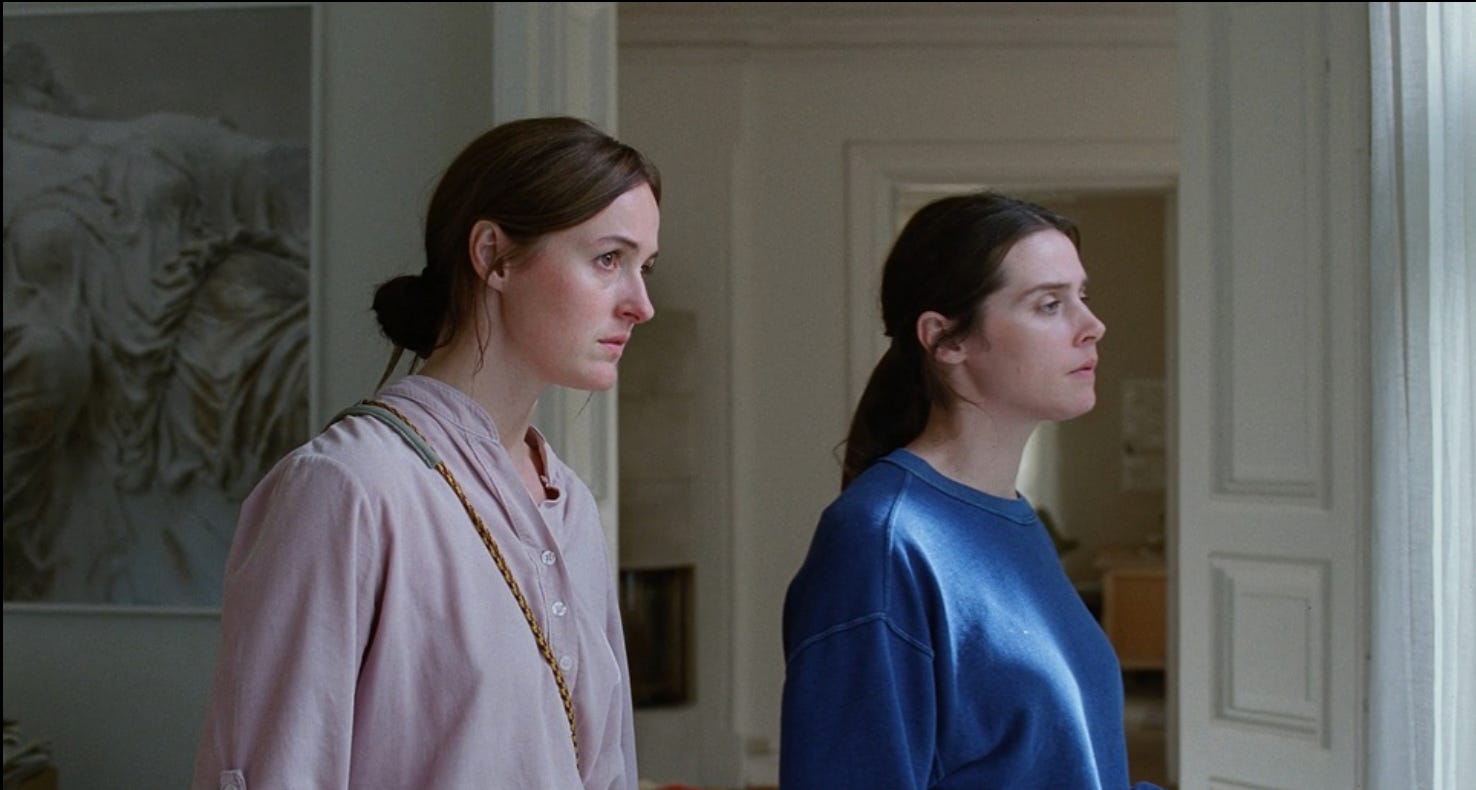
As the eldest daughter and part-time father figure, I do three things well: micromanage, psychoanalyze, and people-please. Joachim Trier’s Sentimental Value (2025) was a heavy hitter because Nora (Renate Reinsve) is me and I am her, though I firmly believe this is a universally shared sentiment between all eldest daughters who watched the film. The story follows sisters Nora and Agnes (Inga Ibsdotter Lilleaas) as they reunite with their estranged filmmaker father, Gustav (Stellan Skarsgård), in light of their mother’s passing. He offers Nora a role in his comeback film, which she declines, despite being an actress herself. He then casts a young American actress (Elle Fanning) who is dropped in the middle of a dysfunctional family’s layered conflicts.
It has been months since I watched Trier’s movie, but its imprint on my soul still lingers. I kept returning to the way Nora stepped into Gustav’s shoes and assumed the emotional responsibilities of a father while the girls were growing up. This is highlighted in the scene between the sisters, where Nora asked her younger sister Agnes: ‘Why didn’t our childhood ruin you?’. From a societal sense, Agnes is more successful. She has a career and a family, whereas Nora is a struggling theatre actress. Agnes replies: ‘There’s one major difference in the way we grew up. I had you.’ and goes on to describe instances from their childhood where Nora’s sisterhood merged into parental responsibilities she undertook without being asked to, but perhaps expected to. As I said, heaaavyyy hitter.
As we have established psychoanalysis to be a genetic strength of the first born daughter, I would love to use my abilities for good and engage in some introspection. At the risk of calling myself and other eldest daughters out, how much of this responsibility is placed upon us, and how much is our own-doing? Is the role of a father enforced or a choice we are happy to make? Why the eldest daughter, and why so universally? I hope my assumptions (based on self-reflection) resonate, or, at the very least, spark a discussion.
First, I would like to say that yes, eldest daughters are the pillars of society; yes, it is the most difficult sibling to be and the best sibling to have; and yes, we all deserve a year-long payed leave and a kiss on the forehead. This critique of our demographic does not contradict or diminish these truths.
Even in the most functional familial dynamics, parental responsibilities can be subconsciously transferred to the eldest daughter. The reason this phenomenon is more present in girls than in boys is ‘because of stereotypes and a female’s role in the home. Even if there’s an older son, historically, a lot of childcare duties and household tasks have been assigned to women, even as it trickles down to children in the home. If there’s an older male child, potentially, some of these typically perceived parental tasks are being either assigned to or assumed by the oldest female child in the home.’ (Eshleman, 2024).
Absent fathers have never been more common, due to a number of factors. Marriage isn’t a life-binding contract anymore, so both parties are in a place to leave. Marriage is also not a requirement for parenthood (Kalogirou, 2024). Furthermore, women don’t have to financially depend on men, making leaving an abusive relationship a more feasible task in some aspects. But physical absence isn’t necessarily the factor that propels big sisters into their father’s boots. If anything, I would argue that a single parent household is as likely to have emotionally stable children as a nuclear family is to produce unbalanced children. In this case, unlike in Trier’s film where both cary the same weight, emotional presence is more valuable than physical.
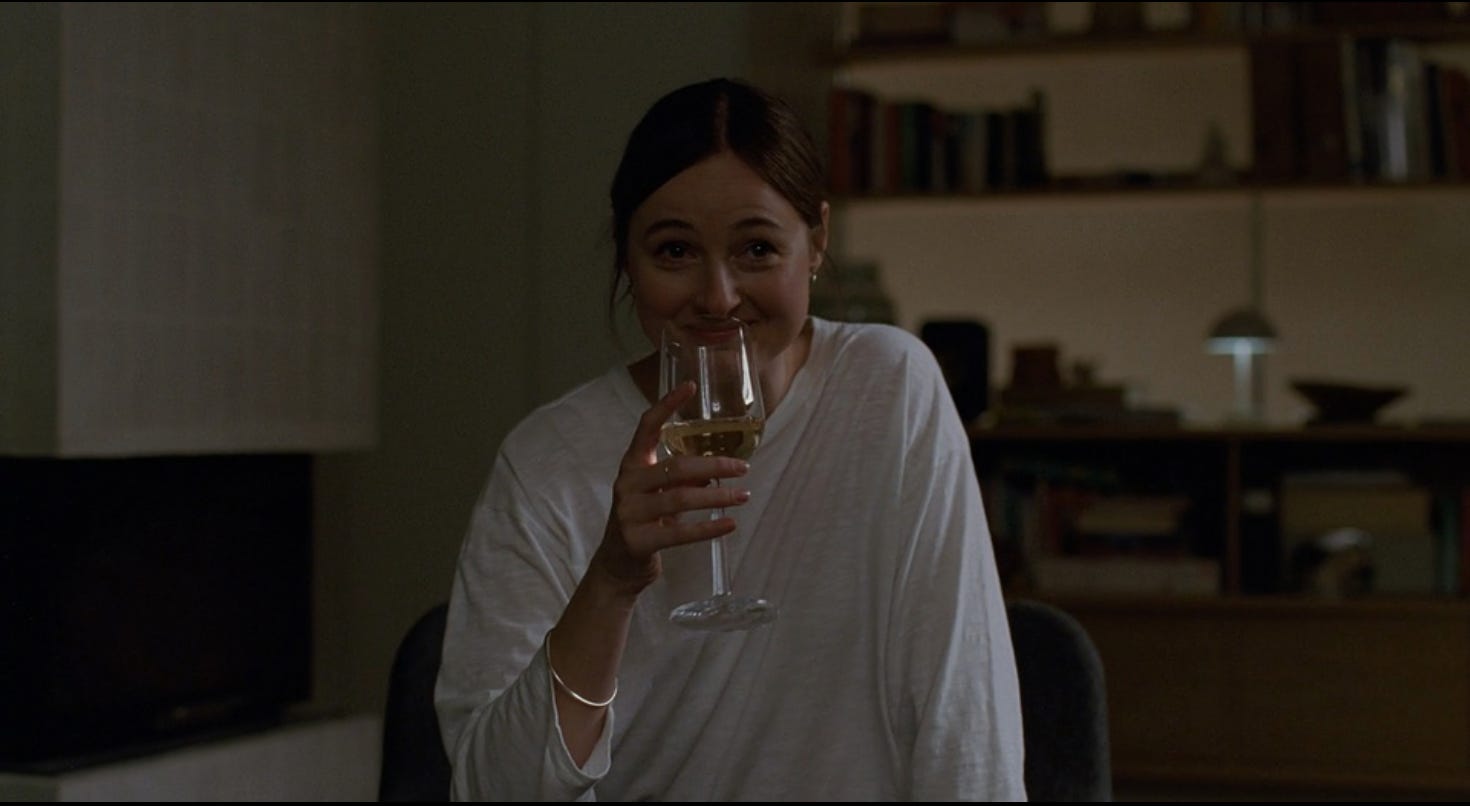
Dr. Kate Eshleman states that first-born daughters ‘can develop a lot of stress or anxiety. [They] may have perfectionistic tendencies and often feel not good enough. [They] may feel the need to please others, and that can result in not feeling good enough because [they]’re not living up to those standards’. Therefore, even though ‘Eldest Daughter Syndrome’ isn’t something you would find in the DSM-5, it is a globally recognizable set of traits. But my question is, how much of this set of responsibilities is actually an expectation, and how much becomes habitual behavior the daughter can’t stop partaking in.
Although I don’t like being too candid online, in my own life I have noticed a self-imposed obligation to emotionally regulate my family members. What started perhaps as a share of parental responsibility, has fortified as an equally external and internal expectation. I am very lucky to have a great family. Both of my parents grew up in the Soviet Union, where emotions were never openly discussed or acknowledged. The more I have matured, the more empathy and grace I have learned to give them regarding the lack of emotional openness we had growing up. Throughout the years, my emotional growth paralleled theirs in a lot of ways. During a particularly tense time a few years ago, I felt totally exhausted emotionally, despite not living with my parents anymore. This made me aware of the system we have functioned by for years, where I would act as the emotional mediator between the two of them, and as a filter between them and my younger sibling. After this conflictual period, where I felt like the survival of my family’s unity depended on my ability to mediate conflict, I felt incredibly guilt-ridden due to my physical absence. This led to a few months of depression, but that is besides the point. The point is that after this incident (which was more like months of murky unresolved emotional disputes), I made the conscious choice to remove myself from the position of middleman. Which ended up being one of the greatest choice I have ever made, because it forced the adults involved in the conflict to face one another and resolute it without external input.
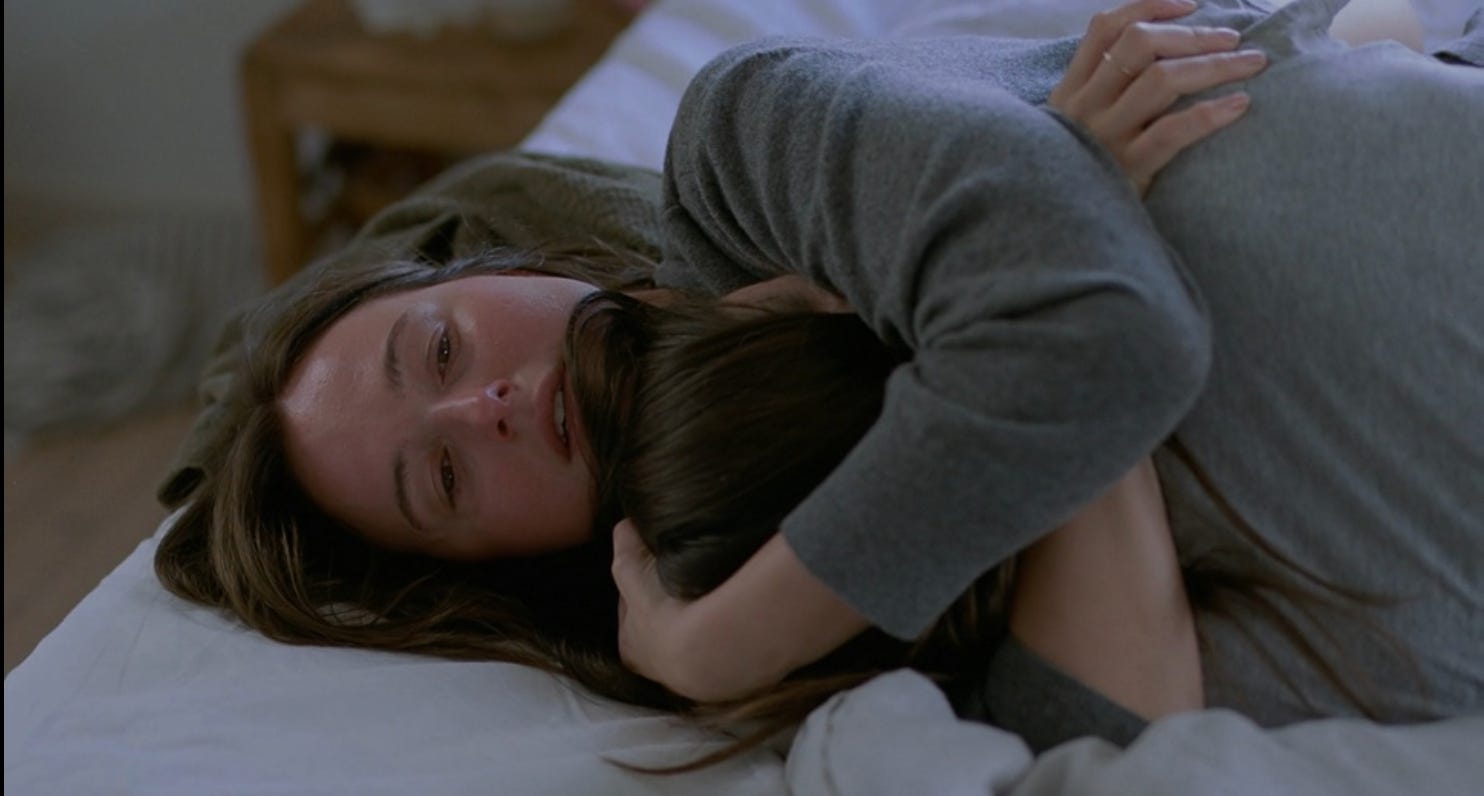
That made me think, is the role of a father enforced or a choice we are happy to make because of the comfort that being in control brings? I think it’s a bit of both, but ultimately a golden handcuff situation. Therefore, how can we eldest daughters heal from hyper-independence and micromanagement, and move on?
The thing that keeps us stuck in this cycle is the belief that the familial structure is bound to crumble when we’re not the only ones supporting it, combined with a deep craving of recognition for the unseen emotional labour that we’ve done over the years.
Tackling one issue at a time, a family can’t be held together by one individual. It is an intricate, complex, dynamic, ever-changing web, where the people involved perpetually shift and evolve. Which means that the structure itself has to be moldable. So, I urge you to relax the white-knuckled grasp in which you hold onto the remnants of what used to work, and trust that the people around you will be able to take on what you put down.
The acknowledgement of effort is the trickier factor of this equation. People might feel entitled to the emotional mediation that was present before, so in its absence, they wouldn’t feel a particular gratitude they’d like to bestow upon you. This search of validation can be resolved in time, or by seeking it elsewhere. Talking to other eldest daughters or consuming media that depicts our emotional involvement has a cathartic quality to it, which is why Sentimental Value resonated so deeply with so many of us.
This is more of a reason as to why I aim to incorporate the character of the eldest daughter in my future films. When the one thing that would make the emotional labour bearable is recognition of said labour, especially when the people who could provide this reassurance refuse to do so, I think cinema can be that metaphorical hug. I felt myself seen in Nora. And that is a power of cinema that is never exploited enough - the ability to comfort and soothe an entire demographic through sincere and empathetic representation.
reference list:
Eshleman, K. (2024). Is Eldest Daughter Syndrome Real? [online] Cleveland Clinic. Kalogirou, D. (2024). The Fatherless Epidemic: How Missing Dads Are Shaping a Generation. [online] Design Thyself.
I love love love how you blended your film knowledge with your raw vulnerability! My fav piece of you yet🫂
as someone who also deeply resonated with the film and main character and written about it too haha, i love this 💖