


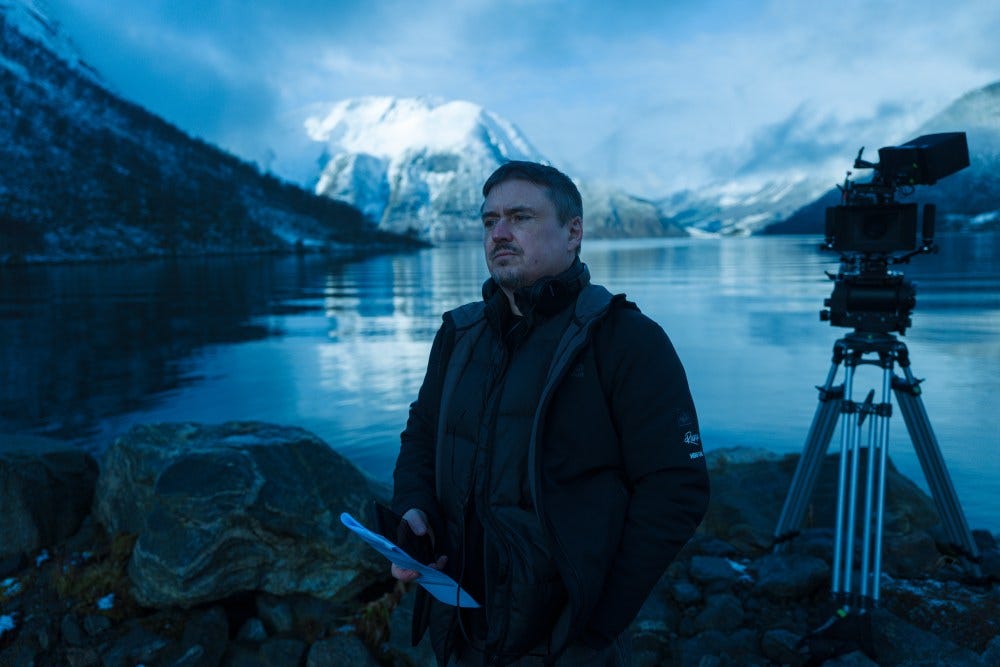
At the 79th Cannes Film Festival, Romanian director Cristian Mungiu walked away with the Palme d’Or for his film Fjord (2026). Although this isn’t Mungiu’s first Grand Prix (winning one in 2007 for his film 4 Months, 3 Weeks and 2 Days), it seems as though the 2026 award truly catapulted Romanian cinema into the limelight.
Fjord is a drama starring Sebastian Stan and Renate Reinsve, that follows a conservative Romanian-Norwegian family facing scrutiny after moving to a liberal Norwegian village. The narrative is loosely based on the true story of the Bodnariu family, that unfolded in 2015. The film is set to release later this summer. A win at Cannes doesn’t directly correlate to commercial success, albeit it awards a director prestige and critical acclaim that can translate into good marketing. Of the five previous winners of the Palme d’Or, four garnered Oscar Nominations, and two of films, Anora (2024) and Anatomy of a Fall (2023), won Academy Awards. At the time of writing this article, the only Oscar winner of Romanian heritage is Natalie Musteață, who won the award for Best Live Action Short Film at the 2026 ceremony. It is reductionist to judge the success of a film based on its achievements at festivals and award shows, yet those parameters provide a quasi-objective verdict.
Fjord’s leading man, Sebastian Stan is another notable Romanian figure in contemporary Hollywood. His casting feels very intentional and appropriate for the story at hand. Hiring A-Listers comes with a lot of commercial benefits, aiding in the securing of funds, and later ensuring baseline box office sales. So, insisting on the participation of an actor that can provide those production benefits, but that also has the appropriate heritage relevant to the story, makes Stan the perfect candidate. Furthermore, father of modern cinema, Martin Scorsese, has come out with praises for Romanian cinema, particularly director Radu Jude. Scorsese states that ‘Jude… He’s something else’, going as far as casting Jude’s constant collaborators Ilinca Manolache and Gabriel Spahiu in his upcoming film ‘What Happens at Night’. It feels as if all of Hollywood is slowly being infiltrated by Romanian filmmakers. However, this process goes beyond an Oscar or a Palme d’Or, all the way back to Romania’s communist history.

To quote my own dissertation (would hate to accidentally self-plagiarize), Romania’s blooming film industry only started thriving after the collapse of communism in 1989, when filmmakers began exploring social and political themes that were muffled under Ceauseșcu’s rule. Like many communist leaders of the 20th century, Nicolae Ceaușescu understood the propagandist nature of filmmaking, thus significantly censoring the art form. Emerging as a national cinema, independent Romanian films that have come out in the years following (including Mungiu’s aforementioned features) have been instrumental in positioning Romania alongside global cinematic discourse through victories at film festivals like Cannes.
Concurrently, the Western film industry is moving East for reduced production costs. While hubs like Prague and Budapest dominate the European landscape when it came to housing big studio productions, Romania is transforming into a leading option as a result of the ‘Wednesday Effect’. The first season of the commercially successful Netflix show Wednesday (2022) was filmed in Romania, which opened the gates for film tourism. The country has up to a 45% cash rebate system and world-class soundstages in the country’s capital Bucharest, making it a commercially viable undertaking for western-based studios and production companies.
For filmmakers like Mungiu and Jude, this support isn’t applicable. The sole governmental grant that local filmmakers are eligible for is the CNC (Centrul Național de Cinematografie) fund contest, which is a paid venture. Thus, an independent filmmaker’s attempt to compete and survive alongside Hollywood productions becomes increasingly difficult. For Romanian national cinema, this presents a modern form of colonization, where filmmakers have to make an active choice regarding the positionally of their productions: play by Hollywood rules, or consciously go against them.
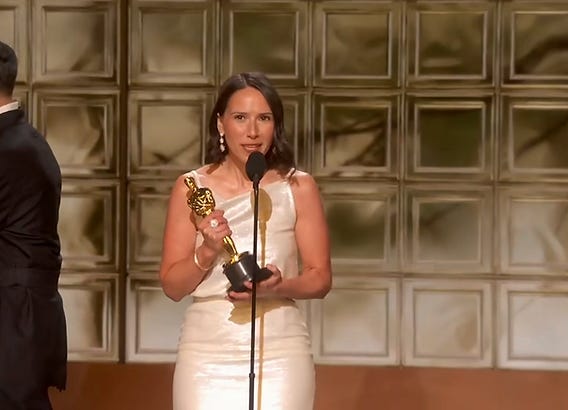
Clearly, the more profitable route is monetizing the European flare and creating films that are digestible to a Western audience, yet undoubtably infused with Romanian flare. The question is why this, why now? My hypothesis is that the increased relevancy of Romanian filmmaking - in a Hollywoodian sense - stems from the industry’s shift East for production cost cutting. Perceiving Romania as a place where ‘proper’ films can be shot gives validity by proxy to its local filmmakers. It is also worth noting that the most prominent Romanians in Hollywood at the moment don’t work or live (or have ever lived, as is the case for Musteață and Stan) in Romania. For the Romanian public, one that has championed second generation Romanians, Mungiu’s win feels major. They are finally deserving of a figure promoting local stories and placing the country on Hollywood’s map. Fjord, alongside Musteață’s Oscar, Scorsese’s recognition, Stan’s Academy Award Nomination and so on, cement the validity of Romanian cinema’s presence in a multipolar global landscape. This openness, curiosity, and, perhaps, fascination of the Western audience towards Romanian storytelling feels refreshing and exciting.
I feel educated 🧘🏼♀️