

I hate being told that because the path to my dreams is unconventional, it means it’s not worth pursuing. It’s been exactly one week since I have graduated film school. I am coming out of university with two feature film credits under my belt, and an additional project in pre-production (I have been employed as crew for all of these, these are not my films). The worthiness of going to film school is a topic constantly debated, and in my own life, my university hasn’t directly helped me in finding jobs. If you are familiar with the film industry, coming out of school with a film lined up could only result from some serious nepotism. At least that is what I’ve always been told and believed, until proving myself otherwise. I moved to London when I was 16, leaving my family behind in Moldova (#represent), in order to pursue filmmaking. So, having finished my academic ventures with an upcoming job, I feel qualified to dismantle this limiting belief that seems to universally be preached upon those trying to enter the film industry. Now that my cohort and I are properly starting our professional lives, I’m becoming more aware of how my attitude in approaching my career contrasts that of others around me. Throughout these years I have wanted to pursue filmmaking, my love for the craft has only deepened with each work opportunity, as has the loudness to which I speak my ambitions. My circle consists of 90% film people, and 10% ambitious, artistic-leaning individuals, so the experience I outline stems from interactions within and outside of this bubble.
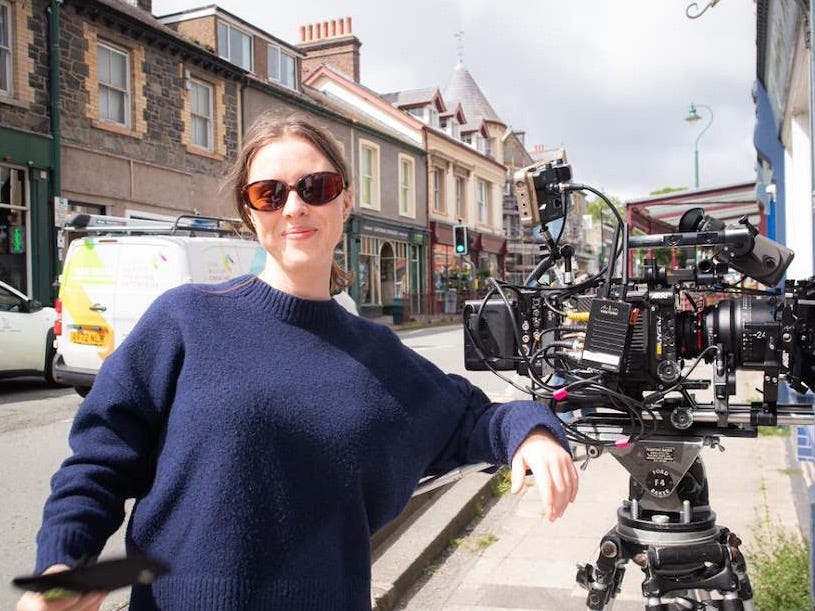
To get a few things out of the way, my parents have no ties to the film industry, you don’t need famous parents to make it in the industry (even if that is always a plus), and it is genuinely not as hard to get jobs as it is made out to seem. I’m not saying it is easy, or that opportunities fall out of the sky, but I thought I’d be unemployed until I was in my late 20s, whereas I’m still waiting for my degree to arrive in the mail and already signed my third contract. This isn’t a way for me to brag, if anything it’s to showcase that - more often than not - what you hear shouldn’t be what you listen to. During my three year degree, most of my professors (who, in their own right, have professional experience in the industry) have drilled the difficulty of show business into all of us: there are barely any jobs, AI is replacing most of them, you have to think realistically! Maybe it’s the naivety of my youth, but I fundamentally disagree with ‘viewing things realistically’. In any career, but especially in film, delusion is part of your job description. If I’d have thought ‘realistically’, I think I would have freaked myself out before even trying to bet on myself.
When talking to my course mates and coworkers, so much of the discussion tends to understandably flow to the toughness of the business and perpetual job scarcity. I am always astounded by the demoralizing nature of those conversations. Earlier this summer, I read James Allen’s As a Man Thinketh, a book that solidifies the power of thought and how thinking shapes your reality. I have subconsciously guided my life thus far according to the principles outlined in that book, but seeing Allen’s concepts explained so clearly solidified the conscious architecture of my current and future thoughts. I wholeheartedly believe that the only reason I have gotten the opportunities I have is through continuous delusional pursuit. Energy flows where intention goes. I don’t count the number of jobs I apply for, the number of seeds I plant, the number of shots I take. That statistic couldn’t be more irrelevant to me. I send invites out into the universe without expecting an answer back, because that is me spreading the surface area where luck could find me. So, when I do get an opportunity back, it feels unexpected and like a reward. Even from this stage, the focus isn’t on the outcome (positive or negative), but on the process. You put stuff out and you let it go. I’ve had countless of conversations with my friends, where they’d say ‘I’ve applied to 25 jobs and heard nothing back.’ That is a very discouraging sentiment, and if I had to count, I’d probably applied to 25 and some before getting anything back. But I genuinely couldn’t care less and actively make no space for that frustration in my head. What this looks like day to day is reaching out to people and applying for things, yet treating this period in-between as the time to sharpen my craft. I write my script as a main thing and reach out to people as a side quest (while working in a cafe because living in London is not cheap). Success comes down to perseverance, and perseverance always comes down to perspective. Luckily, you’re the only one in control of how you choose to perceive the reality round you.
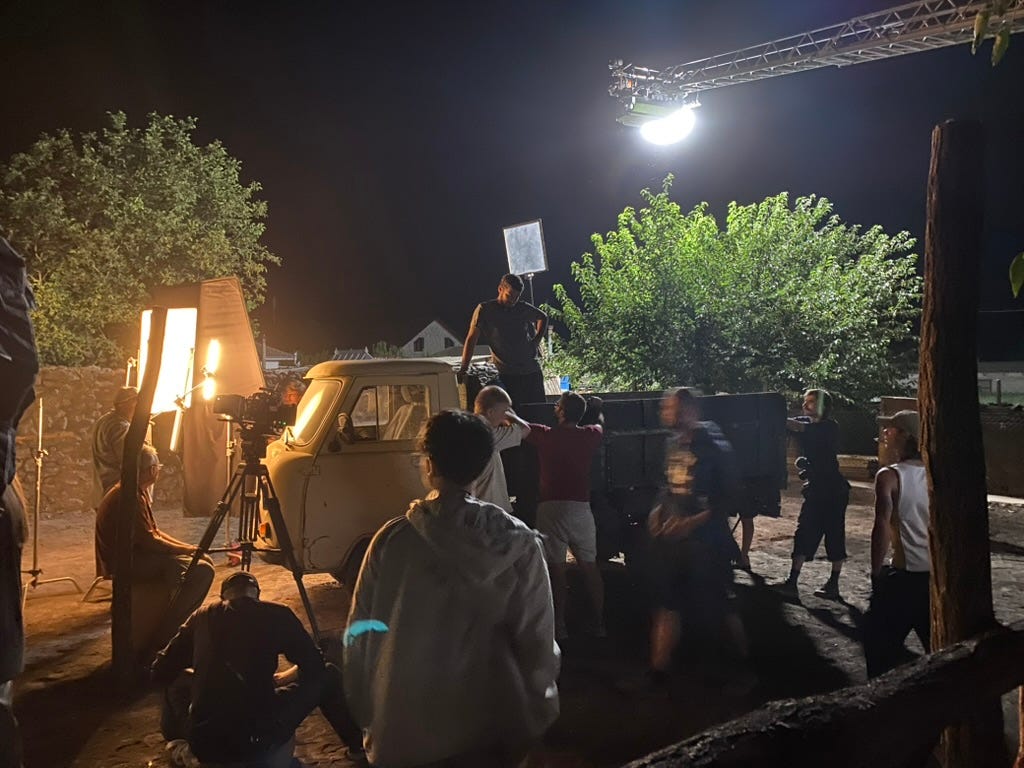
Another discrepancy in the way I approach work to other ways I’ve observed, is hesitancy for putting yourself out for an opportunity you are objectively under-qualified for. My father has this phrase which I will be loosely translating from Romanian: ‘the fool is not the man who asks, but that who gives.’ You are never in the wrong for shooting your shot and you are rarely the one to decide how qualified you are. All of the feature films I have worked on this far, I have been objectively under-qualified for. I want to make one thing clear before continuing this argument: not having existing credits or prior experience in a role means that by the time you step foot on set it is your obligation to be ready to do the job to the highest standard. My first job on a feature film was as Second Assistant Camera. In my opinion, this is one of the more demanding roles on set, and having never professionally worked in the camera department before, it was a huge responsibility. I couldn’t be more grateful for my camera team, for their patience with me and for their trust that I would be able to learn quickly. And ultimately, my ‘lack’ of experience didn’t stop me from 1) going for the job, and 2) making sure the job was done a minimum to the standard that was expected. In a practical sense, this mean familiarizing myself with the equipment, watching every YouTube video on the face of the earth, reaching out to friends with more experience for advice, asking the people in my department when I had qualms, and not being afraid to be perceived as a beginner. Because I am a beginner. But that does not give me leeway to slack or not perform.
Being humble (not modest) transcends your first film. In February, I worked on a feature as a Script Supervisor. This is a role I have always wanted to do seriously, and have done on a few shorts beforehand, so my confidence entering it was perhaps higher than when doing my first film. With my third film approaching, which I am also Script Supervising, I feel like I have more to learn than I ever have before. This is the old Catch 22, where the more you know the less you know. The experience behind me gave me the overview to understand the cogs of the machine, and now can focus on sharpening my own craft. So, even though on paper I might be more qualified approaching this feature than my previous ones, I feel like I have never had more to learn. No matter how little or how much experience I have, there’s always so much more to fine-tune and do to a higher quality. So, I’ve found it essential to fall in love with the process of learning and perfecting my craft, because your attitude and dedication towards the work is your business card, more than a CV could ever be. After my first feature (which I got by calling a producer I met at a film festival I was volunteering for), I got another job a few months later because people got to know me as someone professional and hard working, despite my lack of experience on paper. Work generates work, so it’s all about opening that first door and letting your work ethic do the talking.
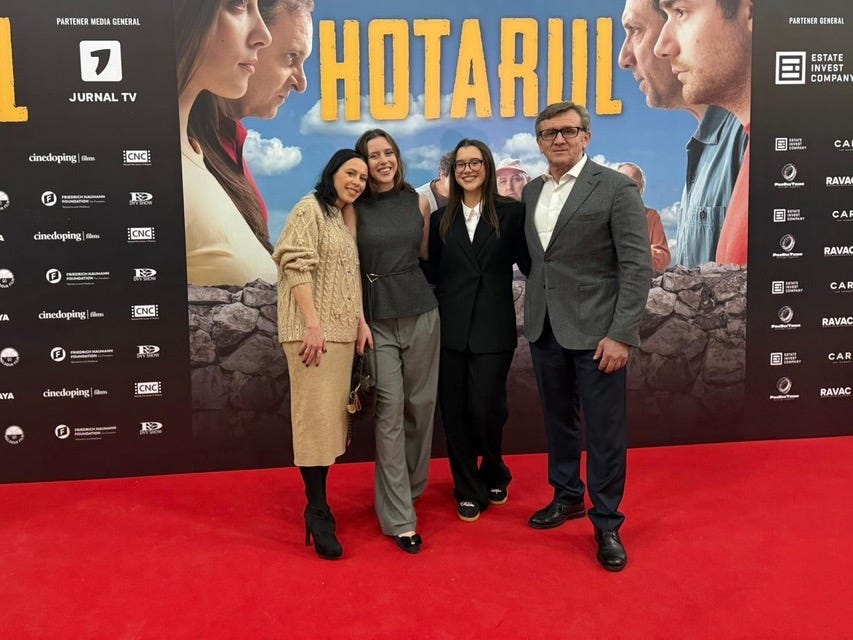
I am lucky enough that all of the credits I have been able to get thus far have been relatively high positions (more so with Script Supervising which is an HoD role), yet I have never felt any role or project to be too small. Not every job you do is going to creatively or professionally fulfill you, but you are rarely above any kind of work, especially at the start. Obviously, you must be treated with respect and that should be a nonnegotiable for all jobs, but you will work on all kinds of sets and have what to learn from any experience.
No opportunity falls from the sky, ever. Even the most unexpected job offer down the line will come from a seed planted by the past version of you. When you are getting started, although having no connections can feel discouraging, it is absolutely not a reason for you to not give it your best shot and make those connections. In practice, this looks like emailing people, dm-ing people (instagram is our linkedin), and working on your craft so that whenever a job presents itself, you are as set-ready as you can be. I don’t think our industry is necessarily hard to break into, because in my head if it would have been hard, I wouldn’t have been able to do it. But being on the other side of that (still very much in the infancy of my career), I know that a lot more is in your hands than you’d maybe like to admit. No one will discover you, no one will grant you a magical contract, unless you put yourself out there to be discovered. So I urge you to stop focusing on how hard breaking through is and how scarce the jobs are, because you always get to see what you choose to focus on. Instead, channel your energy on mastering the skills of your profession and reaching out to as many people as you can. You never know which door will open, but you can bet on being ready once you’re through the door.
Needed to hear that today. Thank you, truly. An inspiring journey and a hopeful way to walk it ✨
My mindset is “it’s my job to apply, and theirs to refuse/accept me.” So many people already give themselves a “no,” way before an actual employer…
This was another delicious read, and so excited to hear more about your new project in the future🙈